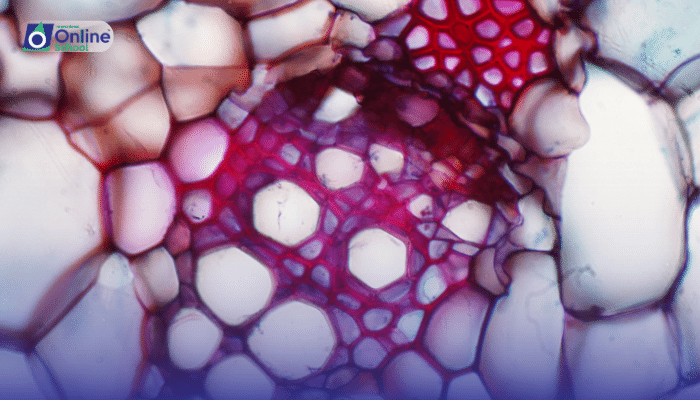
Learning Outcomes:
i. Define and differentiate between xylem and phloem, the two main types of vascular tissue in plants.
ii. Describe the structure and function of xylem vessel elements, sieve tube elements, companion cells, and tracheids.
iii. Explain how the structure of each type of vascular tissue element is adapted to its specific function in water and nutrient transport.
iv. Discuss the role of vascular tissue in supporting plant growth and development.
v. Analyze the adaptations of vascular tissue in different plant groups to suit their specific environments and lifestyles.
i. Vascular Tissue: The Transport Network of Plants
Plants, like all living organisms, require a constant supply of water and nutrients to support their growth and development. Vascular tissue, a specialized transport system, is responsible for the movement of water and nutrients throughout the plant body. It consists of two main types of tissue: xylem and phloem.
ii. Xylem: Transporting Water Upward
Xylem is responsible for transporting water from the roots to the leaves and other aerial parts of the plant. It is composed of various types of cells, including:
Xylem vessel elements: These elongated, interconnected cells form continuous tubes that provide a pathway for rapid water transport. Their walls are thickened with lignin, a strong and supportive material that prevents them from collapsing under negative pressure.
Tracheids: These elongated, spindle-shaped cells are similar to xylem vessel elements but have no openings between them. They provide structural support and also contribute to water transport, especially in gymnosperms and seedless plants.
iii. Phloem: Transporting Nutrients Throughout
Phloem is responsible for transporting nutrients, such as sugars, amino acids, and some ions, from sources of production, mainly leaves, to sinks, including developing roots, leaves, and fruits. It is composed of sieve tube elements and companion cells.
Sieve tube elements: These specialized cells have porous walls that allow for the movement of nutrients in solution. They are arranged in end-to-end connections, forming continuous tubes called sieve tubes.
Companion cells: These cells are closely associated with sieve tube elements and provide metabolic support, such as energy production and regulation of solute transport.
iv. Structural Adaptations for Efficient Transport
The structure of each type of vascular tissue element is specifically adapted to its function in water and nutrient transport.
Xylem: The elongated shape and thickened walls of xylem vessel elements and tracheids provide a low-resistance pathway for water transport and structural support.
Phloem: The porous walls and end-to-end connections of sieve tube elements facilitate the efficient movement of nutrients in solution. Companion cells provide the necessary metabolic support for this process.
v. Role of Vascular Tissue in Plant Growth and Development
Vascular tissue plays a crucial role in supporting plant growth and development. It ensures that water and nutrients are efficiently transported to all parts of the plant, enabling photosynthesis, nutrient uptake, and various metabolic processes.
Water transport: Xylem provides the pathway for water to reach the leaves, where it is essential for photosynthesis. It also supplies water to other parts of the plant, maintaining turgor pressure and supporting plant growth.
Nutrient transport: Phloem transports nutrients produced in the leaves to other parts of the plant, where they are used for growth, development, and storage. This transport is crucial for maintaining the plant's overall health and productivity.
vi. Adaptations of Vascular Tissue in Different Plants
Vascular tissue has evolved various adaptations to suit the specific environments and lifestyles of different plant groups.
Trees: Trees have developed a well-developed vascular system with extensive xylem and phloem tissues to support their large size and vertical growth.
Grasses: Grasses have a unique arrangement of vascular bundles, which provides flexibility and support for their hollow stems and ability to withstand wind and grazing.
Aquatic plants: Aquatic plants often have reduced or modified vascular tissue, as they rely less on water transport from roots. They may have air sacs or other adaptations for buoyancy and gas exchange.
Vascular tissue is a complex and essential component of plant anatomy, providing the transport network that supports plant growth, development, and function. The specialized structure of xylem and phloem, with their unique cell types and adaptations, allows plants to efficiently transport water and nutrients throughout their bodies, enabling them to thrive in diverse environments. Understanding vascular tissue provides valuable insights into plant physiology, ecology, and evolution.
